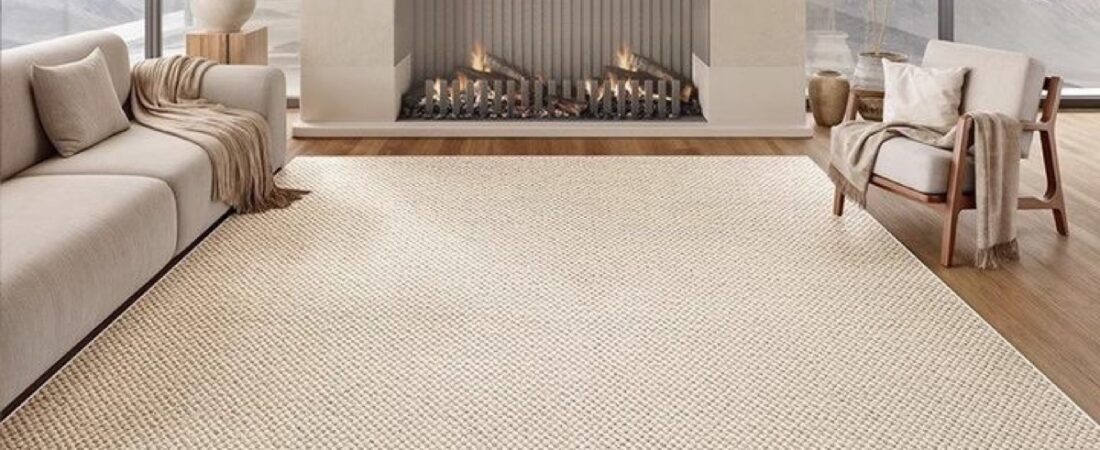
Tufted rugs and printed rugs can both work for DTC home brands, but they solve different business problems.
A tufted rug usually gives more texture, pile depth, and perceived softness. A printed rug can give faster artwork flexibility, lower development burden, and more pattern complexity at smaller order sizes.
The wrong choice creates trouble: weak margins, slow sampling, color complaints, edge curling, poor product photography, or a customer experience that does not match the product page.
This guide compares tufted and printed rugs from a sourcing and quality-control point of view.
The Short Answer
Choose tufted rugs when the brand promise depends on texture, pile feel, and a more premium hand.
Choose printed rugs when the brand needs artwork flexibility, faster iteration, complex patterns, or lower initial development risk.
But do not decide by production method alone. Compare:
- target retail price
- material and backing
- MOQ
- sampling lead time
- color control
- edge finish
- packing method
- customer expectation
- return risk
What Is A Tufted Rug?
A tufted rug is made by inserting yarn into a backing, then applying a secondary backing or adhesive structure. Tufted products can vary widely in material, pile height, density, backing, edge finish, and hand feel.
Strengths:
- better texture and depth
- more premium tactile impression
- strong product photography when material is good
- flexible size programs
- familiar home decor positioning
Risks:
- pile height and density variation
- shedding
- edge finishing defects
- backing odor or curing issues
- higher packing volume
- more expensive sample revisions
Tufted rugs need strong sample control. A small change in yarn, pile height, backing, or finishing can change the customer experience.
What Is A Printed Rug?
A printed rug uses a surface or fabric base and applies artwork or pattern through a printing process. Printed rugs can support detailed artwork, fast seasonal designs, and broad pattern variation.
Strengths:
- complex artwork
- faster design iteration
- lower texture-development burden
- useful for seasonal launches
- potentially lower MOQ by design
- easier colorway testing
Risks:
- lower perceived texture if product page overpromises
- colorfastness risk
- print clarity variation
- edge curl
- thin hand feel
- pattern alignment issues
- customer disappointment if photos imply pile depth
Printed rugs should be positioned honestly. A printed rug can be a strong product, but it should not be marketed like a thick tufted rug if the hand feel is different.
Cost Comparison
Tufted rugs often have higher cost drivers:
- yarn type and weight
- pile height
- density
- backing
- adhesive or latex process
- trimming and finishing
- edge binding
- packing volume
Printed rugs often have different cost drivers:
- base fabric
- print process
- artwork setup
- color matching
- coating or finish
- edge treatment
- backing layer
- packing format
For DTC brands, the better cost question is:
Which construction gives the customer experience needed at the target margin?
A printed rug may be cheaper to produce, but if returns rise because customers expected a plush rug, it is not cheaper. A tufted rug may cost more, but if it supports premium pricing and lower dissatisfaction, it can win.
MOQ And Lead Time
MOQ depends on material, supplier, artwork, size, and production line.
Tufted rugs may require more commitment when:
- yarn needs custom dyeing
- pile height or density is custom
- backing is special
- size range is broad
- color matching requires multiple rounds
Printed rugs may be easier for:
- artwork testing
- seasonal patterns
- small design batches
- broader SKU experiments
Lead time can also differ:
- Tufted: sample approval may take longer if hand feel, pile, and backing need revisions.
- Printed: artwork revisions can be faster, but color matching and print clarity still require control.
The practical sourcing move is to ask for a sample timeline by decision point:
- artwork or design approval
- material approval
- color approval
- construction approval
- packing approval
- bulk production
Do not accept one generic lead time for the whole project.
Quality Control Differences
Tufted Rug QC
Check:
- pile height
- pile density
- tuft bind or pull risk
- backing adhesion
- shedding
- trimming consistency
- edge binding
- odor and curing
- size tolerance
- surface defects
ASTM floor-covering standards include methods and guides related to pile yarn floor coverings, including tuft bind and surface appearance. These standards are useful reference points when deciding which supplier tests or lab checks matter for a high-volume SKU.
Printed Rug QC
Check:
- print clarity
- color accuracy
- pattern alignment
- edge curl
- coating or finish consistency
- colorfastness
- base fabric hand feel
- size tolerance
- packing marks
AATCC methods are commonly referenced for textile colorfastness topics. For DTC brands, the key is to decide which claims and customer use cases justify formal testing.
Customer Expectation Risk
Tufted and printed rugs can both fail when product content overpromises.
Avoid:
- showing a printed rug as if it has thick pile
- using close-up images that exaggerate texture
- hiding backing or edge details
- failing to show thickness
- using lifestyle photos with no material information
- using one review or sample photo for multiple constructions
Product pages should make the construction clear:
- material
- thickness or pile note
- backing
- care instructions
- whether the rug is folded or rolled
- expected texture
The best sourcing decision can still fail if marketing sets the wrong expectation.
Packing And Shipping
Tufted rugs can be bulkier and may be better rolled for some sizes. Printed rugs may fold more easily, but folding can create crease complaints depending on material and backing.
Check:
- folded or rolled packing
- inner bag
- moisture protection
- carton strength
- compression marks
- shipping route
- warehouse receiving rules
- return repacking feasibility
For DTC brands, packing is part of the customer experience. A lower freight cost can be offset by fold marks, odor, or return difficulty.
Anonymous Case Fragment
A home decor brand wanted to launch a pattern-heavy rug collection. The first plan was tufted construction because the brand wanted a premium feel. Sampling showed the texture was strong, but the artwork lost detail and each revision added time.
The brand tested a printed construction for two seasonal designs and kept tufted construction for the core neutral line.
The final assortment used both methods:
- tufted rugs for texture-led evergreen SKUs
- printed rugs for pattern-led seasonal SKUs
The key was not choosing one construction forever. It was matching construction to customer expectation and SKU role.
Decision Checklist
Choose tufted if:
- texture is central to the value proposition
- the target price can support higher production and freight cost
- the SKU is evergreen or repeatable
- the brand can control sample-to-bulk consistency
Choose printed if:
- artwork flexibility matters
- the brand is testing patterns
- speed and lower development burden matter
- the product page can honestly position the hand feel
Use both if:
- the assortment has different SKU roles
- core products need texture
- seasonal products need artwork agility
FAQ
Are tufted rugs better than printed rugs?
Not always. Tufted rugs usually offer stronger texture, while printed rugs can offer better artwork flexibility. The better choice depends on price point, customer expectation, and SKU role.
Are printed rugs lower quality?
Not necessarily. Printed rugs can be strong products when the base material, printing, backing, edge finish, and product positioning are controlled. Problems occur when they are marketed like thick pile rugs.
Which rug type has lower MOQ?
Printed rugs may be easier for design testing, but MOQ still depends on supplier, size, base material, artwork, and finishing. Always confirm by SKU and size.
What should I inspect on tufted rugs?
Inspect pile height, density, backing, edge finish, shedding, odor, size, surface defects, and packing marks.
What should I inspect on printed rugs?
Inspect color accuracy, print clarity, pattern alignment, backing, edge curl, colorfastness risk, size, and packing marks.
CTA
Send the target SKU role, hand feel expectation, and supplier direction on WhatsApp before approving either tufted or printed rug production.
Sources Checked
- ASTM D6719 guide for evaluating pile yarn floor covering –
https://store.astm.org/d6719-22.html - ASTM D1335 tuft bind standard page –
https://store.astm.org/d1335-17.html - AATCC TM16.3 colorfastness to light summary –
https://members.aatcc.org/store/tm16-3/959/
Construction and cost
Continue through this sourcing path.
Use the full sequence below to move from product direction into quality, packing, and quote-ready decisions without dropping the buyer context between pages.
Page 1: Machine-Woven Rug Supplier Review Buyer Route For Construction, Packing, And Repeat OrdersUse this buyer route to review machine-woven rug construction fit, packing discipline, sample control, and repeat-order stability before choosing a supplier.
Page 2: Washable Rug Supplier Review Buyer Route For Construction, Care Claims, And Repeat OrdersUse this buyer route to review washable-rug construction, care claims, backing behavior, pack recovery, and repeat-order stability before choosing a supplier.
Page 3: Washable Rug MOQ Buyer Route For Construction, Size Mix, And Program FitUse this buyer route to review washable-rug MOQ by construction, size mix, print route, packing logic, and retail program fit before sourcing starts.
Page 4: Washable Rug Opened-Condition Buyer Route Before ShipmentUse this buyer route to control washable rug opened-condition proof with fold recovery, flatness, edge behavior, backing stability, and channel expectations before shipment.
Page 5: Washable Rug Peg-Display Fold-Memory Buyer Route Before Retail LaunchUse this buyer route to control washable rug peg-display fold memory with hang method, crease behavior, face presentation, recovery speed, and retail-launch readiness before shipment.
Page 6: Washable Rug Front-Panel Visibility Buyer Route Before Retail ShipmentUse this buyer route to control washable rug front-panel visibility with fold layout, visible design area, barcode placement, display read, and shipment approval before retail release.
Page 7: Washable Rug Front-Card Coverage Buyer Route Before Retail DisplayUse this buyer route to control washable rug front-card coverage with visible design balance, label size, barcode logic, and display-read quality before retail approval.
Page 8: Washable Rug Front-Window Balance Buyer Route Before Retail ApprovalUse this buyer route to control washable rug front-window balance with visible area, card or label interaction, fold layout, and retail-read quality before shipment.
Page 9: Washable Rug Front-Fold Symmetry Buyer Route Before Retail ApprovalUse this buyer route to control washable-rug front-fold symmetry with face balance, design centering, card interaction, and fixture behavior before retail approval.
Page 10: Washable Rug Front-Panel Centering Buyer Route Before Retail DisplayUse this buyer route to control washable-rug front-panel centering with visible-face balance, design alignment, card fit, and fixture behavior before retail display.
Page 11: Washable Rug Front-Card Alignment Buyer Route Before Retail DisplayUse this buyer route to control washable-rug front-card alignment with visible-face balance, card position, fold interaction, and retail discipline before display approval.
Page 12: Washable Rug Front-Face Straightness Buyer Route Before Retail DisplayUse this buyer route to control washable-rug front-face straightness with visible-face proof, fold interaction, card impact, and retail discipline before display approval.
Page 13: Washable Rug Front-Panel Straightness Buyer Route Before Retail DisplayUse this buyer route to control washable-rug front-panel straightness with visible-panel proof, fold interaction, card impact, and retail discipline before display approval.
Page 14: Washable Rug Front-Window Straightness Buyer Route Before Retail DisplayUse this buyer route to control washable-rug front-window straightness with visible-window proof, fold interaction, card impact, and retail discipline before display approval.
Page 15: Washable Rug Front-Display Window Balance Buyer Route Before Retail DisplayUse this buyer route to control washable-rug front-display window balance with visible-window proof, fold interaction, card impact, and retail discipline before display approval.
Page 16: Washable Rug Front Display-Panel Balance Buyer Route Before Retail DisplayUse this buyer route to control washable-rug front display-panel balance with panel proof, fold interaction, card impact, and retail discipline before display approval.
Page 17: Washable Rug Front Display-Face Balance Buyer Route Before Retail DisplayUse this buyer route to control washable-rug front display-face balance with face proof, fold interaction, card impact, and retail discipline before display approval.
Page 18: Washable Rug Front Display-Centerline Buyer Route Before Retail DisplayUse this buyer route to control washable rug front display centerline with centerline proof, fold interaction, card impact, and retail discipline before display approval.
Page 19: Washable Rug Front Display-Axis Buyer Route Before Retail DisplayUse this buyer route to control washable rug front display axis with axis proof, fold interaction, card impact, and retail discipline before display approval.
Page 20: Washable Rug Front Display-Reference Line Buyer Route Before Retail DisplayUse this buyer route to control washable rug front display reference line with line proof, fold interaction, card impact, and retail discipline before display approval.
Page 21: Washable Rug Front Display-Face Line Buyer Route Before Retail DisplayUse this buyer route to control washable rug front display face line with face proof, fold interaction, card impact, and retail discipline before display approval.
Page 22: Washable Rug Shelf-Fold Recovery Buyer Route Before Retail ShipmentUse this buyer route to control washable rug shelf-fold recovery with crease behavior, shelf-ready timing, flatness return, edge response, and retail acceptance before shipment.
Page 23: Rug Fold-Mark Tolerance Buyer Route Before Bulk ShipmentUse this buyer route to review rug fold-mark tolerance, opened appearance, recovery time, channel expectations, and shipment approval before bulk release.
Page 24: Rug Stacked-Roll Compression Buyer Route Before Warehouse ReleaseUse this buyer route to control rug stacked-roll compression with stack load, surface pressure, recovery timing, pack method, and warehouse-release discipline before shipment.
Page 25: Rug Corner-Lift Recovery Buyer Route Before Retail DisplayUse this buyer route to control rug corner-lift recovery with pack effect, opened-condition proof, recovery timing, display behavior, and retail approval before shipment.
Page 26: Rug Opened-Flatness Timing Buyer Route Before Store PlacementUse this buyer route to control rug opened-flatness timing with unpack route, visible shape recovery, placement window, and store-readiness before retail placement.
Page 27: Rug First-Opening Shape Buyer Route Before Retail Floor DisplayUse this buyer route to control rug first-opening shape with opening route, visible silhouette, settling behavior, and floor-display readiness before retail placement.
Page 28: Rug Surface-Wave Recovery Buyer Route Before Retail DisplayUse this buyer route to control rug surface-wave recovery with opening proof, settling time, fixture effect, and display discipline before retail presentation looks unstable.
Page 29: Rug Edge-Settle Line Buyer Route Before Retail Floor PlacementUse this buyer route to control rug edge-settle lines with opening proof, recovery timing, pack-route diagnosis, and floor-read discipline before retail placement.
Page 30: Rug Face-Opening Balance Buyer Route Before Retail DisplayUse this buyer route to control rug face-opening balance with visible-area proof, fold-route effects, floor-read symmetry, and display discipline before retail placement.
Page 31: Rug Opened-Border Balance Buyer Route Before Retail DisplayUse this buyer route to control rug opened-border balance with visible-edge proof, fold-route effects, border symmetry, and display discipline before retail placement.
Page 32: Rug Opened-Edge Line Buyer Route Before Retail DisplayUse this buyer route to control rug opened-edge line with visible-edge proof, fold-route effects, perimeter straightness, and display discipline before retail placement.
Page 33: Rug Opened-Perimeter Balance Buyer Route Before Retail DisplayUse this buyer route to control rug opened-perimeter balance with visible-edge proof, fold-route effects, side-to-side balance, and display discipline before retail placement.
Page 34: Rug Opened-Silhouette Balance Buyer Route Before Retail DisplayUse this buyer route to control rug opened-silhouette balance with full-floor proof, fold-route effects, outer-shape stability, and display discipline before retail placement.
Page 35: Rug Opened-Outline Stability Buyer Route Before Retail DisplayUse this buyer route to control rug opened-outline stability with full-floor proof, outline comparison, fold-route diagnosis, and display discipline before retail placement.
Page 36: Rug Opened-Frame Balance Buyer Route Before Retail DisplayUse this buyer route to control rug opened-frame balance with full-floor proof, frame comparison, fold-route diagnosis, and display discipline before retail placement.
Page 37: Rug Opened-Centerline Balance Buyer Route Before Retail DisplayUse this buyer route to control rug opened centerline balance with centerline proof, fold-route diagnosis, side balance, and display discipline before retail placement.
Page 38: Rug Opened-Axis Balance Buyer Route Before Retail DisplayUse this buyer route to control rug opened axis balance with axis proof, fold-route diagnosis, side balance, and display discipline before retail placement.
Page 39: Rug Opened-Reference Line Buyer Route Before Retail DisplayUse this buyer route to control rug opened reference-line balance with line proof, fold-route diagnosis, side balance, and display discipline before retail placement.
Page 40: Rug Opened-Floor Read Buyer Route Before Retail DisplayUse this buyer route to control rug opened floor read with full-floor proof, opening-route diagnosis, side balance, and display discipline before retail placement.
Page 41: Rug Roll-Direction Opening Effect Buyer Route Before ShipmentUse this buyer route to control rug roll-direction opening effect with surface presentation, edge behavior, recovery flow, channel expectations, and shipment approval before export.
Page 42: Digital Printed Rug Rolled-Vs-Folded Edge Buyer Route Before ShipmentUse this buyer route to control digital printed rug pack method with edge stress, print-boundary stability, recovery timing, channel fit, and shipment approval before export.
Page 43: Rug Label Placement Buyer Route Before Export PackingUse this buyer route to review rug label placement with visibility, scannability, fold or roll behavior, and receiving logic before export packing is locked.
Page 44: Rug Backing Selection Buyer Route For Anti-Slip, Fold Recovery, And Channel FitUse this buyer route to choose rug backing by anti-slip behavior, fold recovery, washable positioning, floor contact, and retail or project use before sampling.
Page 45: Rug Size Mix Planning Buyer Route For Retail Programs And Container EfficiencyUse this buyer route to plan rug size mix by hero sizes, room role, carton logic, retail assortment, and container efficiency before bulk orders.
Page 46: Digital Printed Rug Color Approval Buyer Route Before Bulk ProductionUse this buyer route to approve digital printed rug color by reference source, scale effect, room-light reading, repeatability, and bulk-release rules before production starts.
Page 47: Digital Printed Rug Edge-Finish Buyer Route Before Bulk ProductionUse this buyer route to review digital printed rug edge finish with print boundary, curling risk, seam stability, and opened appearance before bulk production.
Page 48: Digital Printed Rug Buyer Route For Retail Programs And Project OrdersA practical digital printed rug sourcing checklist covering base cloth, print clarity, backing, size range, washability, packing, and channel fit for retail and project buyers.
Page 49: Faux Fur Rug Buyer Route For Bedroom Retail And Home Decor ProgramsA practical faux fur rug sourcing checklist covering pile feel, backing, shedding, size planning, carton handling, and channel fit for bedroom, retail, and home decor buyers.
Page 50: Faux Fur Rug Pack Recovery Buyer Route For Fold Marks, Loft, And Shelf ReadinessUse this buyer route to review faux-fur rug loft recovery, fold marks, shedding risk, brush finish, and shelf-readiness after export packing.
Page 51: Diatom Composite Bath Mat Buyer Route For Retail And Functional-Mat ProgramsA practical diatom composite bath mat sourcing checklist covering absorbency, surface feel, anti-slip backing, thickness, edge durability, packing, and channel fit for retail and home buyers.
Tufted Vs Printed Rug Buyer Route For Cost, MOQ, And Lead-Time Decisions – Current pageA practical comparison of tufted rugs and printed rugs for DTC home brands, covering cost, MOQ, lead time, quality control, packing, and customer expectations.
Page 53: Carpet Material Cost Buyer Route For Fiber, Feel, And Channel FitA practical carpet material cost comparison covering polypropylene, polyester, faux fur surfaces, cotton blends, backing choices, feel, durability, and quote-fit before sampling.
Page 54: Cuihuangkou Carpet Cluster Buyer Route For Supplier Fit And Production-Base ContextA practical Cuihuangkou carpet cluster overview covering what the Tianjin rug production base is useful for, what buyers should ask, and how to evaluate supplier fit without relying on factory-name lists.
Previous in this path: Diatom Composite Bath Mat Buyer Route For Retail And Functional-Mat ProgramsA practical diatom composite bath mat sourcing checklist covering absorbency, surface feel, anti-slip backing, thickness, edge durability, packing, and channel fit for retail and home buyers.
Next in this path: Carpet Material Cost Buyer Route For Fiber, Feel, And Channel FitA practical carpet material cost comparison covering polypropylene, polyester, faux fur surfaces, cotton blends, backing choices, feel, durability, and quote-fit before sampling.
Next buyer path
Choose the next rug or floral route before the sourcing thread gets vague.
These routes move the buyer from this page into the next working surface: deeper product-line direction, the wider resource library, or a WhatsApp brief with enough structure to stay specific.
Read rug and artificial flower sourcing guidesUse the full Floor Flower guide path when the blocked issue still moves between rug direction, floral realism, quality control, and shipment prep.
Machine-woven rug sourcing notesUse the rug route when the next decision is construction, material, room-use fit, or product-line direction before sample and quote work starts.
Cuihuangkou carpet cluster overviewGo to the cluster overview when the buyer needs production-base context and supplier-frame clarity before naming factories or locking a rug direction.
Construction and cost
Continue with construction and cost decisions.
These resource pages compare rug construction, material cost, and production-base fit so a buyer can normalize early sourcing choices before a commercial quote is accepted.
Machine-Woven Rug Supplier Review Buyer Route For Construction, Packing, And Repeat OrdersUse this buyer route to review machine-woven rug construction fit, packing discipline, sample control, and repeat-order stability before choosing a supplier.
Washable Rug Supplier Review Buyer Route For Construction, Care Claims, And Repeat OrdersUse this buyer route to review washable-rug construction, care claims, backing behavior, pack recovery, and repeat-order stability before choosing a supplier.
Washable Rug MOQ Buyer Route For Construction, Size Mix, And Program FitUse this buyer route to review washable-rug MOQ by construction, size mix, print route, packing logic, and retail program fit before sourcing starts.